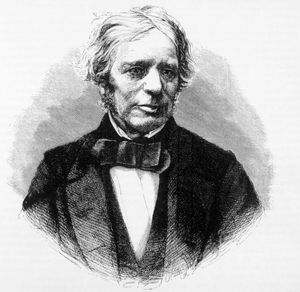
Highgate Cemetery contains the earthly remains of many leading figures in British history. Buried there are Karl Marx, George Eliot, Christina Rossetti, and many other household names. Included among them is the brilliant, pioneering Victorian scientist Michael Faraday, laid to rest in the Dissenters’ Quarter of this historic graveyard.
Faraday’s life (1791–1867) did overlap part of Charles Darwin’s (1809–1882). Both men were based in London and were Fellows of the Royal Society, but whereas Darwin’s mind was drawn to fanciful speculations about an evolutionary past, Faraday’s focus was on practical experimentation in the present.
Scottish physicist James Clerk Maxwell also overlapped the lifetime of Faraday. They had complementary minds: Maxwell was a great theoretician and mathematician, while Faraday hated maths but stood out as a brilliant experimentalist. The two scientists also shared faith in Christ and a firm trust in the Bible as the accurate Word of God.
Faraday became famous for his public lectures at the Royal Institution in London. All sorts of people – young and old, rich and poor – would attend, and he had them quite spellbound. At a public lecture in 1847, Faraday said that the discoveries of science ‘should lead us to think of him who hath wrought them; for it is said by an authority far above even that which these works present, that “the invisible things of him from the creation of the world are clearly seen, being understood by the things that are made, even his eternal power and Godhead”’.
— This article continues for ET members