
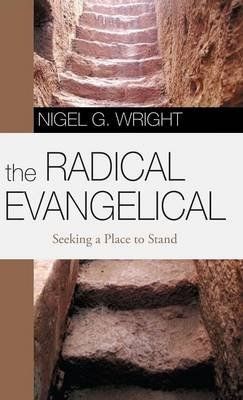

A few weeks ago, a friend sent me a copy of The Radical Evangelical, by Nigel Wright*. Although written five years ago, this is an important book for two reasons.
Firstly, it purports to examine the nature of evangelical theology, and seeks to deal with areas of persistent disagreement and controversy (e.g. the status of the Bible, the nature of the atonement, the fate of the unevangelised, and the doctrine of hell).
Secondly, according to the blurb, the author ‘offers a new way forward which remains committed to the fundamentals of the faith, while retaining a flexible response to the challenges of the future’.
If this book is a pointer to current trends in British Evangelicalism, there is cause for great concern.
 Alex Donnelly
Middle course
Nigel Wright is a senior church leader who has years of experience in the pastoral ministry. He has lectured in Christian Doctrine at Spurgeon’s College, and is its current Principal.
This is not, therefore, the work of a young radical who has just arrived on the theological scene, but rather represents the considered views of a man of experience.
In adopting the term ‘Radical Evangelical’, Wright states that he is seeking to steer a middle course between ‘fundamentalism’ and ‘liberalism’. At first sight this suggests that he is veering towards something like conservative Evangelicalism. But this is not the case. Wright is often critical of this view and adopts a position far to the left of the evangelical ‘centre ground’.
In these articles I will examine his position on four major doctrines: Scripture, Christ, redemption and divine judgement.
— This article continues for ET members