
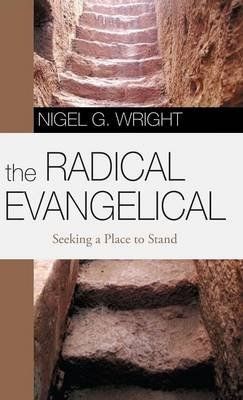

Previously, I introduced a book entitled The Radical Evangelical by Nigel Wright. This claims to set out a modern-day Evangelical theology, a middle way between liberalism and fundamentalism.
But as we considered Wright’s teaching about Christ and Scripture we began to see that there is nothing evangelical about his views. We complete our critique of this book, and the dangerous trends it represents, by looking at Wright’s teaching on redemption and judgement.
Penal substitution
Wright examines the doctrine of redemption in his fifth chapter. Although wishing to retain some traditional elements, he is particularly critical of the notion of penal substitution.
He writes: ‘Penal substitution … risks presenting a loving Son appeasing a wrathful and angry Father. This is not the intention of the New Testament which clearly asserts the origin of the cross in the love of the Father’ (p.59). Wright here makes the fundamental mistake of juxtaposing God’s love and wrath as if they were mutually exclusive.
 Alex Donnelly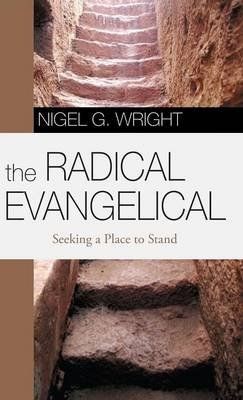
Caricaturing the traditional evangelical understanding of the death of Christ, he continues: ‘the cross is portrayed as an ingenious way in which God can forgive human beings, as he has wanted to all along, without selling out on his just government of the world. However, the cross then becomes God’s way out of his own dilemma rather than a resolution of the human condition’ (p.64).
— This article continues for ET members