
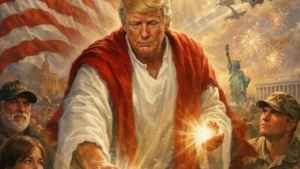

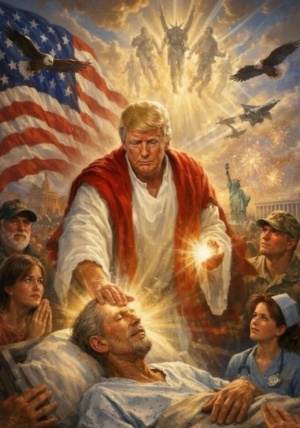
The recent controversy surrounding Donald Trump posting an AI-generated image of himself appearing like Jesus is more than a passing oddity. It is a revealing moment. When a political leader can present himself, even half-seriously, in the likeness of Christ, and be applauded rather than rebuked by many who profess faith, something has gone deeply wrong. This is not merely about one man’s misjudgment; it exposes a wider spiritual confusion at the heart of modern evangelical culture. It is about the rise of cultural Christianity, and the dangers it brings.
We should be fair. Cultural Christianity is not without its apparent benefits. In an increasingly secular age, any renewed interest in Christian morality, church attendance, or the language of faith may seem like a welcome reprieve. When biblical categories re-enter public discourse, when churches see fuller pews, when Christian ethics are at least acknowledged in national life, these are not things to be dismissed lightly.
Yet Scripture consistently warns us that proximity to truth is not the same as possession of it. The Lord Jesus Christ himself spoke of those who ‘honour me with their lips, but their heart is far from me’ (Mark 7:6). Cultural Christianity can produce precisely this condition: an outward alignment with Christian forms, while the heart remains untouched by grace.
— This article continues for ET members