
Revised and extracted from Gathered For Glory: Why We Worship (Broken Wharfe, 2025). Reused with permission.
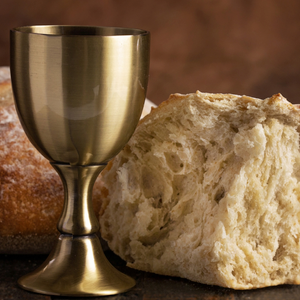
Eating with others is never less than the food, but it is always more! We eat together as a sign that we are sharing in fellowship and communion together around the table of feasting. Thus, as we turn our attention to the Lord’s Supper, the second of the two tangible means of grace, we must appreciate that it is rightly called a supper, or a feast.
That was the context of the first Lord’s Supper in the upper room, as Jesus inaugurated the new covenant meal around the Passover table, and every ‘Communion’ service since that time has been an opportunity to feast with Christ and his people upon the finest spiritual food, represented by the bread and wine.
Feasting and fellowship
From time immemorial, meals and feasts have had an integral role in the maintaining of human relationships, on both a personal and formal level. Think of children at a birthday party. They sit around the table, their eyes light up, and everything is focused on the communal food and the shared joy. The two come together in a wonderful way at a birthday feast!
In a similar way, we meet with friends at coffee shops to share food, drinks, and conversation. We invite newcomers for lunch after the service of worship because in that context we can cultivate our fellowship. Throughout human history, meals and feasts have been central to the securing of alliances, the establishment of peace treaties, and the avoidance of relational breakdown.
— This article continues for ET members