
Part 1 is here: William Booth (1829-1912)
 Nigel Faithfull
In 1861 William and Catherine campaigned at Hayle, St Ives, Redruth and Camborne in Cornwall. Strong men shouted out, fearing hell, and in sorrow for their sins. An evil spirit troubled a woman who appeared to talk to her dead husband.
The disorder disturbed William Booth, who told them to pray and sing when he commanded. Although about 7000 souls were recorded as saved, the local Methodists eventually banned the Booths from their pulpits.
Itineration
Local fishermen there had contacts in Cardiff, so that is where they headed after Penzance, in 1862.Their first meetings were at a Baptist church.
William soon received support from some wealthy evangelicals — the Cory brothers John and Richard who were colliery- and ship-owners, and Jonathan E. Billups, a railway builder. In 1863 their meetings were held in a circus tent. Soon the moral tone of Cardiff changed for the better and the magistrates had little to do.
Their next visit was to Walsall in the West Midlands. The outcasts of society refused to enter chapels, so William employed the new tactic of marching through streets in slum areas, leading the people to wagons where they were addressed by converted prize-fighters and thieves — the Hallelujah Band.
The Booths then journeyed to Leeds, where their sixth child, Marian Billups Booth, was born. Catherine was reduced to pawning her jewellery and lecturing on temperance to gain support. William preached at Nottingham and Sheffield, but the churches there offered him little encouragement.
Catherine received an invitation from Free Church Methodists in Rotherhithe to lead a mission. Handbills advertised ‘Come and hear a woman preach’, such was the novelty. Modestly dressed in black, she had a quiet manner and a calm and precise delivery.
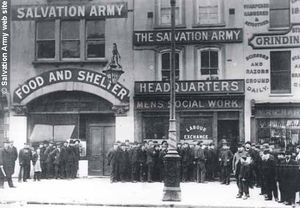
Catherine felt at home in London, so they moved back to a rented house in Hammersmith, and then on to Hackney. William Booth conducted his first London mission in the East End, on Sunday 2 July 1865, in a rented tent on the Quaker burial ground.
— This article continues for ET members